
Growing guide
How to grow beetroot in Ireland
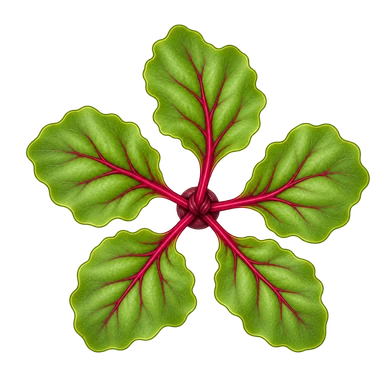
Beetroot is a useful crop for a steady supply of manageable roots, not just one large autumn lifting. Round and long-rooted forms offer different kitchen shapes. Ordinary seed comes as clusters that can produce several seedlings, so a group emerging together is normal. Early sowing and winter frost need more thought than the crop’s easy reputation might suggest.
On this page
At a glance
- Start with
- Seed clusters, or monogerm seed that produces one seed per unit
- Best position
- Most soils, prepared into a fine, workable seedbed
When and where to start
Direct sowing. April to July is Teagasc’s main window. A protected March sowing is possible with a bolt-resistant variety; it can produce an earlier crop around June. Do not treat that protected early method as suitable for every variety or every cold garden.
Planting and spacing
Set drills 25 cm apart and sow clusters about 4 cm apart and 2.5 cm deep. This is spacing between seed units, not a guarantee of one plant at each station.
If several seedlings emerge together, allow useful plants room to develop instead of treating a cluster as one root. Keep depth consistent, label the batch and use gentle watering to avoid disturbing the row.
Routine care
Keep the seedbed moist during emergence and remove weeds before they crowd seedlings. A fine surface still needs checking after heavy rain or drying weather.
Selective lifting is part of managing the crop. Start taking roots around 5 cm across; removing them gives neighbours more room. A series of small sowings is easier to use than one untouched bed of large roots.
What to watch for
Bolting is a risk in early sowings, which is why March needs a suitable variety and cover. Mangold fly, black bean aphid and beet flea beetle are listed pests; inspect both leaves and roots.
Beetroot is not fully frost hardy. Outside mild locations, Teagasc suggests protection around November with 15 cm of straw or a double layer of fleece. Protection is not a guarantee against every winter loss.
Harvest and storage
Lift progressively when roots suit your kitchen rather than waiting for uniform maximum size. The guide’s broad harvest window is July to March, depending on sowing and protection.
Use lifted roots promptly. Plan successive pickings rather than lifting everything at once. Roots left outdoors need frost protection suited to the site and checks for damage or decay.
Common questions
Why did several seedlings appear from one seed?
A normal cluster can contain up to three seeds. Monogerm varieties are bred to provide one seed per unit.
Can I sow before April?
A March sowing is possible with a bolt-resistant variety and suitable protection, not as an unqualified method for every packet.
Should I wait until all roots are large?
No. Taking useful small roots progressively gives the remaining crop more room and spreads the harvest.