
Growing guide
How to grow broad beans in Ireland
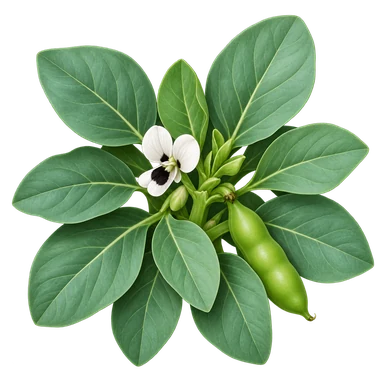
Broad beans make a satisfying early crop: their large seeds are easy to handle and the pods are straightforward to pick. Spring sowing is a manageable first method. Autumn sowing is also possible with a hardy variety, but introduces a winter of weather to negotiate. Tall plants and aphids on soft shoots are the main practical concerns later.
On this page
At a glance
- Start with
- Spring-sowing seed or a hardy overwintering variety
- Best position
- Workable, well-drained ground; support on exposed sites
When and where to start
Direct sowing. Sow from February to mid-June when ground is workable. Hardy varieties such as Aquadulce and The Sutton can also be sown from mid-October to November, weather permitting. Do not assume every variety suits overwintering.
Planting and spacing
Place seeds 5 cm deep in two staggered lines, about 23 cm apart each way. If growing several double rows, allow 60–75 cm between pairs for access.
Teagasc also describes an intensive-bed layout around 23 cm square. This is a different arrangement from separated double rows; choose the method rather than combining its distances.
Mix well-rotted compost through the soil where needed, rather than planting against a concentrated layer. Label autumn and spring batches separately.
Routine care
Keep weeds from crowding seedlings and water in dry spells. Support tall plants or exposed rows with posts and twine along both sides; shorter sheltered plants may stand unaided.
A small sowing each month can spread picking. Teagasc gives roughly three to four months to cropping, with conditions and variety affecting progress.
After harvest, cut healthy stems at soil level and leave roots to decay. Their nitrogen-fixing nodules are useful, but do not promise a measured fertiliser quantity for the next crop.
What to watch for
Inspect soft tips for black bean aphids. Pinching out affected tips can remove much of a local infestation; continue checking.
Chocolate spot and rust are listed diseases. Examine foliage when growth declines rather than assuming weak plants simply need more feed.
Harvest and storage
Pick young pods, before the scar on the pod turns black. Open a sample to check that the beans are still tender rather than judging only pod length.
Autumn sowings can crop in late May or June; spring sowings extend picking from June into October. Use beans close to harvest. Small frequent pickings are easier to use while tender.
Common questions
Must broad beans be autumn-sown?
No. Spring is a straightforward alternative and avoids a winter of exposure.
Do all plants need stakes?
No. Height and exposure decide the support needed. Short plants in shelter may stand unaided.
Why are the beans tough?
Pods may have stayed too long on the plant. Pick younger pods at their intended tender stage.