
Growing guide
How to grow brussels sprouts in Ireland
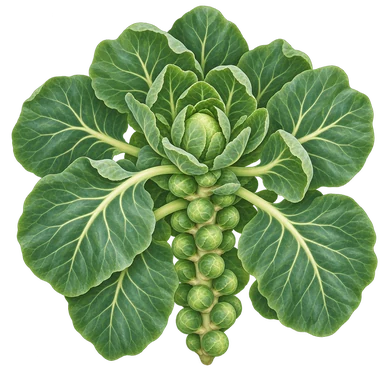
Brussels sprouts occupy their ground for a long time, but a few well-grown plants can supply repeated winter pickings. The challenge is building healthy stems before harvest and keeping pests out of the developing buttons. Choose the picking season before buying seed: early, mid-season and late varieties do not mature together.
On this page
At a glance
- Start with
- Seed or young plants of an early, mid-season or late variety
- Best position
- Fertile ground with drainage; firm planting and support in wind
When and where to start
Indoor sowing. Sow mainly March and April in modules. Late-February protected sowing suits appropriate early varieties, not every beginner crop.
Direct sowing. An outdoor spring nursery bed is another way to raise transplants, not a dense row of final mature plants.
Planting out. Plant mainly May to early June. The guide pairs late-February sowing with mid-to-late-April planting and late-April sowing with early June. Later planting can reduce the eventual crop.
Planting and spacing
Raise only as many plants as you have room for. Label different varieties so their intended harvest seasons remain clear.
Acclimatise protected seedlings, water rootballs and firm into moist prepared soil. Well-anchored stems are important for tall plants.
Allow about 60 × 60 cm for an accessible home crop. Closer arrangements serve other objectives; a concentrated once-over harvest is not the same as repeated household picking.
Routine care
Water in dry spells to build stems without repeated checks. Sprouts need adequate fertility; base additional feeding on soil and product directions, not improvised doses.
Stake plants that rock in wind. Keep mesh supported clear of leaves and inspect beneath it. Maintain edges after weeding instead of assuming a cover works indefinitely.
What to watch for
Aphids can settle inside developing sprouts, so inspect from summer onwards. Slugs may climb stems and feed on buttons in damp weather.
Caterpillars, pigeons and leaf diseases can weaken plants before picking. Look at both leaf surfaces and remove deteriorating foliage. No pesticide programme is prescribed here.
Harvest and storage
Pick firm lower sprouts around 2–4 cm across, then work upwards as more become ready. Leave small upper buttons to develop instead of stripping the whole stem.
Variety schedules can span August to March. Routine home picking generally does not need the top removed. Pick from standing sound plants as needed; severe frost still warrants attention. Leave the remaining sound sprouts on their stems until needed.
Common questions
Should every plant have its top removed?
No. Stopping can concentrate maturity for a once-over harvest; it is generally unnecessary for repeated home picking.
Why grow several varieties?
Early, mid-season and late types spread maturity. One variety cannot be assumed to cover the whole season.
Can I start in late summer?
That misses normal establishment. Sprouts need a long growing season before a worthwhile crop.