
Growing guide
How to grow cauliflower in Ireland
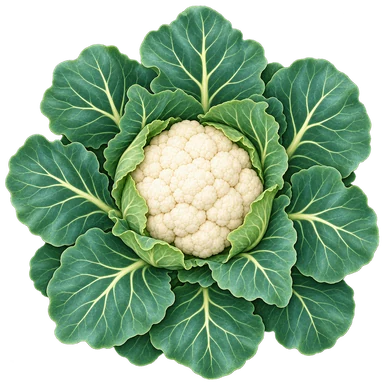
Cauliflower rewards steady growth but is less forgiving of neglect than many leafy crops. The edible head, called the curd, may remain tiny if plants suffer a serious check. Autumn varieties are a sensible first method: start a few plants in late spring, give them space and keep them growing through summer. Very early and midwinter crops are separate projects.
On this page
At a glance
- Start with
- Autumn-variety seed or healthy transplants for the beginner method
- Best position
- Fertile, moisture-retentive soil with convenient access to water
When and where to start
Indoor sowing. Sow autumn varieties late April to June. Summer types can be sown March or April; very early protected crops use a different schedule.
Direct sowing. An outdoor nursery bed can raise suitable late-spring transplants. This is not the same as keeping a crowded seed row as the final crop.
Planting out. Plant autumn crops June to about 20 July, generally five to seven weeks after sowing. Summer crops commonly go out in May. Winter varieties need their own instructions and suitable conditions.
Planting and spacing
Sow a modest batch and label its variety and season. More seedlings than you can space properly make extra work, not a better crop.
Move plants before modules become congested. Acclimatise protected seedlings, water rootballs and firm into prepared ground; avoid rough handling and dry planting conditions.
Teagasc gives about 60 × 60 cm for autumn cauliflower. Summer and winter types use different layouts; some winter crops need 70–75 cm each way. Do not average these into one rule.
Routine care
Maintain steady moisture, particularly during establishment and dry summer weather. Repeated wilting compromises the leaf framework needed for a worthwhile curd.
Fertile soil supports growth from the start. Last-minute feeding is unlikely to rescue a neglected plant after a tiny curd appears.
Inspect frequently near harvest. Weather changes development, so a fixed date is unreliable. Maintain covers without restricting growing leaves.
What to watch for
Buttoning is a small premature curd. Restricted roots, delayed planting and checks to growth can contribute.
Caterpillars, root fly, pigeons and slugs are listed pests. Use appropriate physical protection and inspect beneath it. Suspected clubroot or leaf disease needs assessment, not treatment guessed from one symptom.
Harvest and storage
Cut while the curd is compact, before it loosens and separates. Gather ready heads promptly instead of waiting for all plants in the batch.
Harvest depends strongly on type and weather. January and February crops are especially limited to suitable varieties and mild locations. Use cut heads promptly; prompt picking is especially important once a curd begins to loosen.
Common questions
Which season is easiest for a first attempt?
Autumn cauliflower is generally the more forgiving route in Teagasc’s guidance.
Can I guarantee January heads?
No. Appropriate varieties, mild conditions and weather matter, not just a sowing date.
Why did I get a tiny curd?
A growth check may have caused buttoning. Review seedling handling, watering and planting time.