
Growing guide
How to grow chard in Ireland
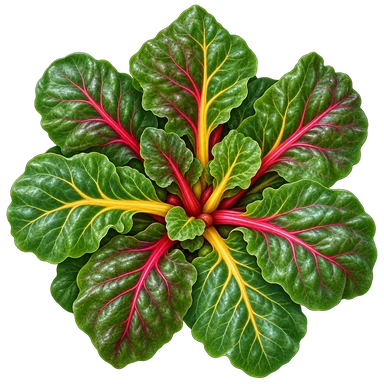
Chard provides repeated leaves from relatively few plants, with decorative stems as a bonus. It is a leaf beet, related to beetroot and perpetual spinach, not true spinach. Keep plants accessible and harvest without stripping the centre. An April sowing followed by a July batch is a practical first approach, with younger plants for autumn and possible spring picking.
On this page
At a glance
- Start with
- Swiss chard seed: white-stemmed or colourful leaf-beet varieties
- Best position
- Reasonably fertile, moisture-retentive ground with picking access
When and where to start
Direct sowing. The detailed Teagasc method uses March to July, with April and July as a useful two-batch approach. Its summary calendar extends into August, but a later start depends on conditions; the July batch gives more establishment time for overwintering.
Planting and spacing
Prepare a clean surface and follow packet depth advice. Label different stem colours if comparing varieties.
Aim for 30 cm rows and 20 cm between plants in the stated method. Thin crowded seedlings instead of leaving every plant together and expecting full-sized leaves.
Water gently during emergence. Direct sowing is straightforward, not a rule against bought young plants; follow supplier instructions if choosing transplants.
Routine care
Weed until foliage occupies the space and water during dry spells. Chard is less prone to bolting than true spinach, but still benefits from attention.
Maintain the July crop through autumn for potential later leaves. Winter growth slows; overwintered plants eventually flower, so arrange another sowing rather than expecting permanent production.
Keep access around plants so outer leaves can be gathered without trampling soil or injuring the growing centre.
What to watch for
Inspect for leaf miner, aphids and slugs; the source shares its perpetual-spinach pest list with chard. Mildews and leaf spot can also affect the foliage.
Remove deteriorating leaves and observe recurring damage before diagnosing it. Crowding hides problems; a hardy crop is not immune to pests.
Overwintered plants normally go to seed in late spring. This ends the main picking cycle, rather than proving the previous crop was a failure.
Harvest and storage
Take outer leaves first, easing or twisting stems away while preserving the centre and enough healthy foliage for continued growth.
Use fresh where possible. Pick only what you can use while the leaves are in good condition. Both tender leaves and substantial stalks are useful in the kitchen; harvest manageable quantities.
Common questions
Is chard true spinach?
No. It is a leaf beet related to beetroot and perpetual spinach, though it fills a similar leafy role.
Why sow in July as well as April?
It supplies younger plants for overwintering and spring picking as the first batch ages.
Can I strip all leaves at once?
For repeated picking, preserve the centre and enough healthy foliage. Take outer leaves first.