
Growing guide
How to grow courgettes in Ireland
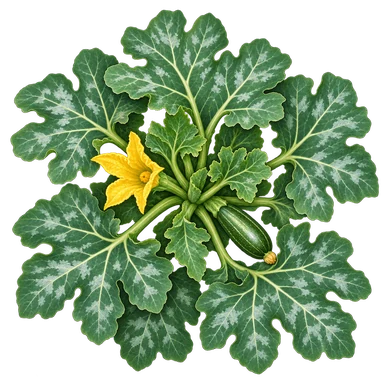
Courgettes are picked while young, long before they become large marrows. A few plants can be generous producers in a warm summer, but their broad leaves need real room. Frost is the main danger at planting time; later, keeping up with the picking is often the bigger challenge. Choose an accessible patch rather than squeezing them into gaps.
On this page
At a glance
- Start with
- Seed or young plants
- Best position
- Warm, sunny, sheltered ground; fertile soil that drains freely
When and where to start
Indoor sowing. Sow singly under cover from mid-April to early May. About 18 °C helps germination; keep subsequent growth frost-free and bright.
Direct sowing. June direct sowing is an alternative once the soil and weather are warm and local frost risk has passed.
Planting out. Plants are usually ready after roughly four weeks, at two true leaves. Harden them off first. Late May to early June is a useful planning window, but earlier plantings in Teagasc’s method need extra cover and suitable local conditions.
Planting and spacing
Sow one seed about 15 mm deep in an 8 cm pot or large module. Keep the compost moist without saturating it; a small seedling does not need the water supply of a mature plant.
For direct sowing, put two seeds at a final station and retain one healthy plant. Space plants about 90 × 90 cm or 1 × 1 m; Teagasc also gives 1 × 1.4 m where wider rows are helpful.
Prepare fertile ground and keep access around each plant. Two small sowings can spread the harvest, with an earlier protected planting followed by a later one when conditions are safer.
Routine care
Check moisture regularly as foliage expands, and water the root zone during dry spells. Leave room to reach the plants without bruising fruit or damaging stems.
Let pollinators reach the flowers. If using cloches during establishment, open or remove them appropriately as the plants begin flowering. Female flowers have a small developing fruit behind the petals.
What to watch for
Slugs can damage new transplants. Later in summer, a powdery coating on leaves may be powdery mildew; a severe early attack can weaken cropping.
The first fruits can be distorted after poor pollination. Remove unusable fruit and check the next flowers rather than assuming the whole plant has failed.
Harvest and storage
Inspect plants every two or three days in warm weather. Pick fruits young, around 15–24 cm for the standard types described by Teagasc, adjusting for the variety. Cut and handle them gently: the skin is easily damaged.
Cover your hands and arms if the coarse foliage irritates your skin. First picking may begin six to seven weeks after planting, depending on conditions. Pick close to use; small frequent pickings are easier to use at their best.
Common questions
Why are the first flowers all male?
An early male-flower phase is normal. Plants usually begin producing more female flowers as the season progresses.
Can I sow straight into the bed?
Yes, in suitable June conditions. Use two seeds at each station and thin to one healthy plant.
Does every courgette need pollination?
Some fruit can develop without it, but bee visits help achieve a fuller crop. Keep pollinators’ access open.