
Growing guide
How to grow cucumbers in Ireland
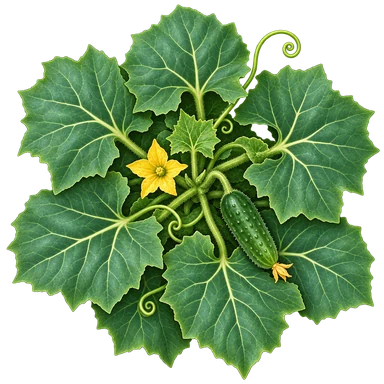
Choose cucumber seed for its final growing place, not just the photograph on the packet. Greenhouse slicing types and outdoor ridge cucumbers have different training and pollination needs. Modern all-female greenhouse hybrids can set fruit without pollination; outdoor ridge types need their flowers left intact for insects. Removing flowers indiscriminately can prevent the crop you are trying to grow.
On this page
At a glance
- Start with
- Seed or young plants labelled for indoor or outdoor growing
- Best position
- Bright protection for greenhouse varieties; warm sheltered ground for ridge types
When and where to start
Indoor sowing. Teagasc describes mid-March to early-April sowing, with 20–25 °C for germination and warm, bright conditions afterwards. Sow later if you cannot maintain these conditions.
Planting out. Roots should fill the pot and local frost risk must have passed. The guide anticipates late-May planting, but harden off outdoor plants gradually and delay in unsuitable weather.
Planting and spacing
Sow one seed about 1.5 cm deep in each 10 cm pot of moist seed compost. Under suitable warmth, Teagasc gives roughly eight to ten days to emergence. Keep the rootball intact when transplanting.
For greenhouse growing, choose indoor varieties. The booklet describes two plants per growbag or planting into suitable border soil, with the rootball about level with the surrounding compost.
Outdoor ridge types need substantial space: Teagasc gives about 2.5 m² per plant. A raised ridge reduces waterlogging risk; plants can trail or be trained on a trellis. This is not the same method as upright greenhouse vines.
Open cloches or frames during flowering so pollinators can reach outdoor plants. Do not apply old greenhouse flower-removal advice to ridge cucumbers.
Routine care
Check water daily and keep the root zone supplied without waterlogging. Feed regularly with a balanced fertiliser, following its directions rather than guessing a concentration.
Train greenhouse vines on secure strings. Teagasc’s system removes side growth and flowers from the lowest metre, then limits later sideshoots; use this only for suitable indoor vines.
For outdoor ridge plants, pinching the main tip after five or six sets of leaves encourages branching. Keep the plants accessible so fruit does not disappear beneath foliage.
What to watch for
A wilting plant in wet soil may have root problems. Check drainage before responding with still more water.
Flower treatment depends on type. Greenhouse varieties may need male flowers removed to avoid unwanted pollination; occasional male flowers can appear even on all-female hybrids, so check the packet. Outdoor ridge varieties need their male flowers for pollination: leave them intact.
Harvest and storage
Pick fruit when it is green, glossy and filled out for the variety. A pointed, incompletely filled end may need longer. Check plants regularly and take fruit before it becomes overmature.
Teagasc recommends using cucumbers fresh or refrigerating them. Keep picking regularly so older fruit does not remain hidden on the plant.
Common questions
How can I recognise a female flower?
It has a small cucumber-shaped swelling behind it, which can develop into the fruit.
Should I remove male flowers?
Leave them on outdoor ridge types. For greenhouse plants, follow the variety’s directions; even all-female hybrids can occasionally produce male flowers that need removing.
Can a greenhouse variety simply go outdoors?
Do not assume so. Choose a variety specifically suited to the intended growing conditions.