
Growing guide
How to grow onions in Ireland
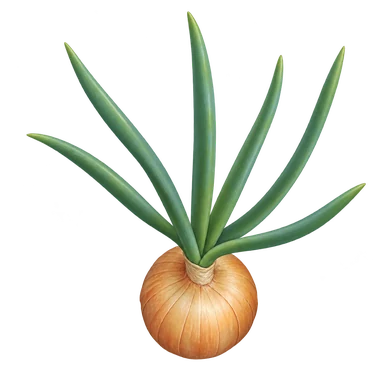
Onions offer the convenience of sets or the broader variety choice of seed. Sets establish quickly; seed-grown bulbs generally keep longer. In Ireland, drying the harvest properly can matter as much as growing it. Plan a sheltered airy drying space before autumn rather than discovering you have wet bulbs and nowhere suitable to put them.
On this page
At a glance
- Start with
- Seed or purpose-grown sets: small immature planting bulbs
- Best position
- Workable, weed-free ground; avoid excessive or late feeding
When and where to start
Indoor sowing. Sow five or six seeds per module from late January to mid-February under protection for the clump method.
Direct sowing. Sow seed from mid-February to mid-March; Teagasc gives the first week of April as a latest opportunity, not the preferred general start.
Planting sets and seedlings. Plant modules in early to mid-April. Spring sets usually go in March to mid-April; choose suitable overwintering sets for planting in the first week of October.
Planting and spacing
For individual direct-sown onions, 25 cm rows and eventual 10 cm plant spacing are one practical choice within Teagasc’s range. Closer spacing generally gives smaller bulbs.
Plant multi-sown modules as intact clumps at 30 × 30 cm. This is distance between groups, not between individual onions; do not mix the two methods.
Use a trowel for sets, planting around 2.5 cm deep so they are just covered. A common layout is 23 cm between rows and 10 cm between sets. Teagasc favours sets around 14–21 mm across.
Routine care
Seed-grown onions establish slowly and compete poorly with weeds. Keep the bed clear throughout the season, with careful weeding near bulbs.
Water late sowings and newly planted sets in dry weather so establishment is not delayed. More feeding is not automatically helpful: excessive or late nitrogen can leave thick necks that are difficult to dry.
What to watch for
Very large sets are more bolt-prone. Buy an appropriate planting grade and match spring or autumn varieties to their intended season.
Bull-necked bulbs have unusually thick necks. Wet conditions, excessive nitrogen or poor bulbing can contribute; use these bulbs promptly instead of putting them into long storage. Inspect bulbs and leaves if recurring rot affects the patch.
Harvest and storage
Overwintered sets generally mature in July, spring sets in August and seed onions around September. Lift when most tops have fallen naturally, then dry with leaves attached until necks are fully dry.
Store sound dry bulbs cool, dry and ventilated, in nets or slatted trays, not moisture-trapping plastic bags. Seed crops usually outlast sets, but inspect regularly and separate anything soft or sprouting.
Common questions
Are sets the same as seed?
No. A set is a small bulb planted individually; seed is sown and grown into a seedling first.
Why leave leaves on during drying?
Correct drying seals the neck. Trimming green necks too early undermines storage.
Should thick-necked onions go into storage?
Use them promptly: their necks are hard to dry and they make poor storage bulbs.