
Growing guide
How to grow potatoes in Ireland
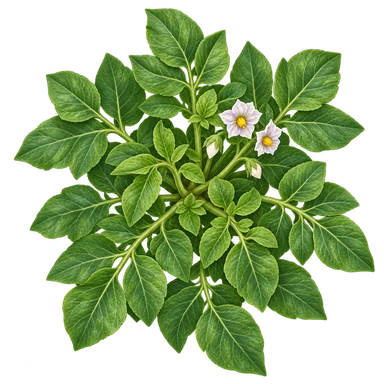
The first digging of early potatoes is a different pleasure from lifting a maincrop for winter meals. Choose the season before choosing the variety and layout. Irish gardeners also need to watch frost and blight. Traditional ridged rows and closely planted flat beds are separate methods in Teagasc’s guidance; their distances must not be combined into one universal spacing.
On this page
At a glance
- Start with
- Certified seed potatoes: planting tubers, not botanical seed
- Best position
- Fertile, workable ground; allow room for your chosen row or bed method
When and where to start
Planting seed potatoes. Earlies are generally planted in March, second earlies in March or April, and maincrop in April to early May. Ideally wait until soil has been around 7 °C for three days. Delay on cold or frost-prone sites: a date alone is not proof that ground is ready.
Planting and spacing
Chitting means sprouting seed tubers before planting. Stand them in a cool, light, frost-free place in February or March to make short sturdy sprouts. It is useful for earlier emergence but not essential.
For rows, place early and second-early tubers 25 cm apart in drills 70 cm apart. Maincrop uses 30 cm between tubers and 75 cm between rows. Provide 10–12 cm soil cover for earlies and 15–17 cm for maincrop.
The separate flat-bed method uses 30 × 30 cm, smaller tubers with two or three shoots, and adequate soil cover. Do not mistake this intensive method for traditional row spacing.
Routine care
Earth up row-grown plants as they develop, drawing soil around shoots and ridging again around 20 cm shoot height. Cover exposed shoots if frost threatens; keep forming tubers away from light.
Correctly covered flat-bed plantings do not normally need the same ridging, unless too shallow. Water during dry periods and inspect foliage regularly rather than leaving the crop unseen until digging.
What to watch for
Blight spreads readily in humid weather and can affect foliage and tubers. Met Éireann’s blight forecast is a weather-risk warning, not a diagnosis of your plants. Follow current official guidance if symptoms appear; no pesticide programme is prescribed here.
Slugs may hollow tubers, especially in wet heavy ground. Frost damages shoots and tubers; light causes greening. Do not eat green potatoes or store damaged and rotting tubers with sound ones.
Harvest and storage
Lift earlies as needed in June or July, second earlies in July or August, and maincrop usually in September or October. Dig a sample to check size rather than relying on flowering alone.
Lift storage crops before winter frost. Store sound tubers cool, dark and frost-free in breathable paper sacks. Inspect regularly; ordinary household conditions do not justify a guaranteed keeping time.
Common questions
Must seed potatoes be chitted?
No. They can be planted unsprouted, but chitting can bring emergence and maturity forward.
Is 30 × 30 cm normal row spacing?
No. It belongs to the separate flat-bed method; traditional rows use the wider distances described above.
Does certified seed mean no disease can occur?
No. Certified seed is a sensible planting choice, not a promise that plants cannot develop disease later.