
Growing guide
How to grow runner beans in Ireland
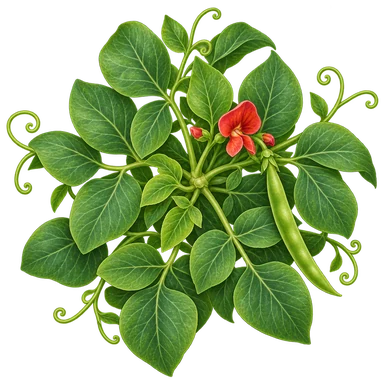
Runner beans turn a sturdy frame into a productive summer screen. Most varieties climb vigorously, so give the supports as much thought as the planting. Wind, dry soil at flowering and cold weather can all limit the crop. One well-managed sowing usually provides a more useful harvest than several rows you cannot keep watered and picked.
On this page
At a glance
- Start with
- Seed or young plants; strong canes or a secure wigwam
- Best position
- Warm, sheltered ground with room for a tall support frame
When and where to start
Indoor sowing. Sow one seed per 8 cm pot under cover in late April to early May. Keep seedlings frost-free rather than rushing them outdoors as soon as they emerge.
Direct sowing. Usually mid-May to late June, when soil is around 11–12 °C. Local soil warmth and frost risk matter more than the date on the calendar.
Planting out. Harden off plants raised under protection and move them outside after local frost risk has passed. Teagasc’s late-May to early-June window is a guide, not a guarantee for every garden.
Planting and spacing
Install the frame before sowing so construction does not disturb developing roots. Teagasc describes 2.5 m canes tied securely across the top; leave access for picking and watering.
For a double row, sow 5 cm deep, with seeds 20 cm apart and rows 45 cm apart. Give each plant a cane. Alternatively, make a stable wigwam of six or seven poles with one plant at each pole.
Dwarf runner varieties are another option for containers. Do not allocate a full climbing frame to a variety intended to remain compact.
Routine care
Gently guide young shoots around the supports. When a climbing plant reaches the top, pinch out its tip so the frame does not become an increasingly heavy tangle.
Water during dry spells, particularly from flowering onwards. Allow bees and bumblebees to reach the flowers: runner beans benefit from insects operating the flower’s pollination mechanism.
What to watch for
Check seedlings for slugs and new shoots for black bean aphids. Where practical, remove small colonies by hand and keep watching the plant.
Flowers without pods do not necessarily mean disease. Check water supply and pollinator access, as well as the weather, before deciding why pod set is poor.
Harvest and storage
Pick pods frequently while they are tender. Large pods left on the plant become less useful in the kitchen and discourage further production.
The possible season runs from mid-July into October in Teagasc’s guide; exposure and autumn frost can shorten it. Pick manageable amounts close to use. Regular gathering gives you the best chance of using pods at their tender stage.
Common questions
Are all runner beans climbers?
No. Teagasc identifies Hestia as a dwarf option for pots; most traditional runner beans need substantial supports.
Why do flowers fall without setting beans?
Dry conditions and poor bee activity can reduce pod set. Check moisture at the roots and ensure pollinators can reach the flowers.
Do I need to sow every few weeks?
Usually not. One sowing is generally enough if plants stay healthy and you keep picking the pods.