
Growing guide
How to grow sweet peppers in Ireland
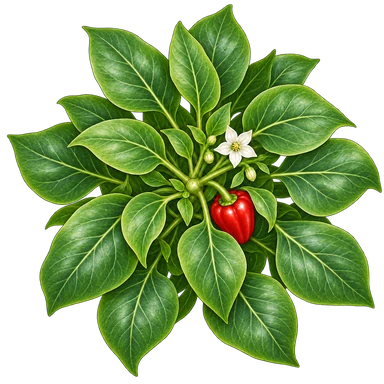
Sweet peppers need sustained warmth, making a greenhouse or tunnel the practical choice for most Irish gardens. A container in a very mild, sheltered outdoor spot is an experiment rather than an equally dependable method. Choose the fruit shape and ripe colour you want, and consider buying a few healthy young plants if you cannot provide warm propagation conditions.
On this page
At a glance
- Start with
- Seed raised in warmth or healthy young plants
- Best position
- Bright greenhouse or tunnel; fertile, freely draining border or containers
When and where to start
Indoor sowing. Start under cover in spring with about 21–25 °C for germination, then maintain warmth and good light. The text read for this guide does not establish a precise month range for every pepper variety; check its packet rather than relying on a fixed date.
Planting out. Move into final greenhouse containers or border soil when roots fill the starter pots and frost risk has passed. Protect plants in cold spells; outdoor trials also need gradual hardening off.
Planting and spacing
Teagasc refers to the tomato seed-sowing method but at higher temperatures: sow in moist seed compost, cover lightly and pot seedlings individually when ready to handle.
Inspect bought plants for wilting, disease and pests, including beneath leaves. Pick a number of plants that fits the protected space rather than crowding them together.
Plant at the same compost level as in the starter pot. Do not copy the deeper tomato method. Teagasc gives two or three plants per growbag; the section does not establish a border-spacing figure, so follow variety-specific directions for that method.
Routine care
Let plants in an unheated greenhouse develop as bushes. A cane around 90 cm tall provides the support described by Teagasc; elaborate cordon training is not needed.
Feed less heavily than tomatoes. Teagasc suggests reduced-strength feeding or a weekly feed; follow the actual product’s directions. It also recommends removing the first flower and deformed young fruit to support early plant development.
Ventilate and shade when strong sunshine overheats the greenhouse. Cold and excessive heat can both reduce fruit set; warmth is useful only within suitable limits.
What to watch for
Misshapen fruit or poor set may reflect temperature, not pests. Teagasc identifies temperatures below 12 °C and above 35 °C as potential problems for fruit set.
Inspect leaves during routine watering. Cut fruit cleanly rather than tearing it from the plant: an injury leaves an unnecessary entry point for disease.
Harvest and storage
Green peppers are ready once their skin is smooth and glossy. Leaving some to reach their variety’s ripe colour produces sweeter fruit, but slows the development of new fruit.
A mixture of green picking and full-colour picking can balance quantity with flavour. Use a knife or secateurs for a clean cut. Gather only what you need and inspect fruit left on the plant.
Common questions
Will every green pepper turn red?
No. Mature colour depends on the variety and may be yellow, orange, red or another stated colour.
Do peppers need tomato-style training?
Not in the unheated-greenhouse method described here. Grow them as supported bushes rather than single-stem cordons.
Can I rely on an outdoor harvest?
Generally not. Teagasc limits this possibility to very mild, bright, sheltered situations, with potentially small late fruit.