
Growing guide
How to grow sweetcorn in Ireland
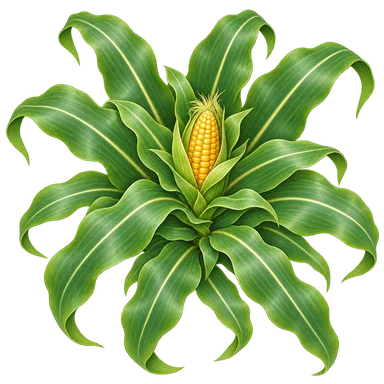
A freshly picked cob is the attraction of sweetcorn, but an Irish crop depends strongly on warmth, shelter and variety. An early variety is a sensible starting point in a cool garden. Give it a block of plants rather than one decorative row: pollen moves on the wind, and the arrangement helps it reach the developing cobs.
On this page
At a glance
- Start with
- Seed or pot-raised young plants; an early variety for cooler gardens
- Best position
- Sunny, warm and sheltered; fertile ground with room for a block
When and where to start
Indoor sowing. Sow in large modules or pots from mid-April to early May. Plan only three to four weeks of propagation so seedlings do not wait too long for planting.
Direct sowing. May to the first week of June is Teagasc’s broad window. Wait for warm soil, around 10–12 °C; an uncovered crop in cold conditions may need a later start.
Planting out. Move plants at roughly 10 cm tall, keeping the rootball intact. Harden off and wait until local frost risk has passed rather than using a calendar date alone.
Planting and spacing
Sow 2.5 cm deep for the protected pot method. Avoid bare-root transplanting: sweetcorn does not tolerate that handling well. Do not let roots become cramped while waiting for safer weather.
Plant in a block at 45 × 45 cm, or 45 × 40 cm as Teagasc’s closer alternative. For direct sowing, retain the final block arrangement and check the packet’s depth instructions.
Check sweetness types if growing more than one variety. Teagasc distinguishes normal-sugar, supersweet and extra-tender types; unwanted pollen from incompatible types or nearby forage maize can affect eating quality.
Routine care
Keep weeds from competing with young plants and supply water during dry spells. Sweetcorn needs adequate fertility; base feeding on your soil and the product instructions, not an improvised dose.
Monitor an establishing block in cool weather. Temporary cover can help early growth, but it does not make the plants frost-hardy. Preserve the block layout that supports wind pollination.
What to watch for
Cold can slow growth even without frost. Poor cob development is not automatically a pest problem: consider weather and pollen supply too.
Teagasc lists aphids and rust as possible problems. Inspect affected leaves carefully. Its guidance gives at least 75 m separation from forage maize, so a garden boundary alone is not sufficient isolation.
Harvest and storage
Dark, dry silks are a cue to check a cob, not proof of ripeness. Press a fingernail into a kernel: clear liquid means it is immature; milky liquid means it is ready.
The upper cob usually ripens first. Two cobs per plant is a typical expectation in the guide, not a promise in a poor summer. Eat promptly for quality; Teagasc says supersweet types can keep refrigerated for up to a week, a claim that should not be extended to every type.
Common questions
Why not grow a single row?
A block gives wind-borne pollen more opportunities to reach the female flowers on neighbouring plants.
Are brown silks a reliable harvest test?
Use them as a signal to inspect a kernel. The milky-liquid test is the final check described by Teagasc.
Can I mix any varieties together?
No. Check the sweetness groups and isolation advice; incompatible pollen can change the eating quality.