
Growing guide
How to grow turnips in Ireland
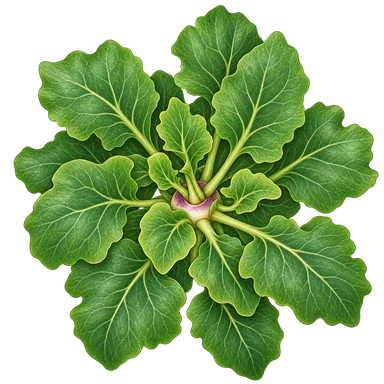
Turnips need not become large roots destined only for the saucepan. Small ones can be lifted for salads, while later roots grow on for cooking. A late-summer sowing also supplies leafy tops. Their short growing time makes small repeated rows useful, but it does not remove the need to water or protect young plants from pests.
On this page
At a glance
- Start with
- Seed; choose the root shape and colour you want
- Best position
- A fine, even seedbed with easy access for watering and covers
When and where to start
Direct sowing. Make small sowings from March to August, repeating every three or four weeks. Teagasc describes roots ready in as little as six weeks under suitable conditions; do not take that as a guarantee after every early or late sowing.
Planting and spacing
Make drills 30 cm apart and 2 cm deep. Sow thinly, cover evenly and gently firm the row; water a dry drill before sowing if needed.
Thin progressively to 5–15 cm between plants, according to the root size wanted. The wider end of the range is not compulsory for every small salad root.
Use fleece or suitable fine mesh to limit flea beetle and cabbage root fly access. Put it in place early and keep it secure after weeding; leave room for the leaves to grow.
Routine care
Water in dry weather to support quick steady growth. Remove weeds before they crowd seedlings, and inspect beneath covers rather than assuming the crop is protected from every problem.
Plan leafy use separately with a late-summer sowing. Keep labels on successive batches so the oldest roots are checked first, and lift useful roots before they become unnecessarily large.
What to watch for
Cabbage root fly, flea beetles and slugs are the main pests named by Teagasc. Leaf holes and root damage need different checks; a brief symptom description is not a full diagnosis.
Look for slugs around young plants and nearby hiding places. No pesticide product or chemical treatment is recommended in this guide. Delayed picking can also disappoint when you wanted tender small roots.
Harvest and storage
Lift golf-ball-sized roots for salads or allow them to reach roughly tennis-ball size for cooking. The intended use matters more than making every root as large as possible.
Take tops from a late-summer sowing for use like spring greens. Use harvested leaves and roots promptly; take only the amount you can use while fresh.
Common questions
Can turnip tops be eaten?
Yes. Teagasc specifically describes using tops from a late-summer sowing like spring greens.
How often should I sow?
A small row every three or four weeks spreads the harvest better than one large batch.
Why thin to different distances?
The closer end of the range suits smaller roots; more space allows larger roots. Match the method to your intended use.